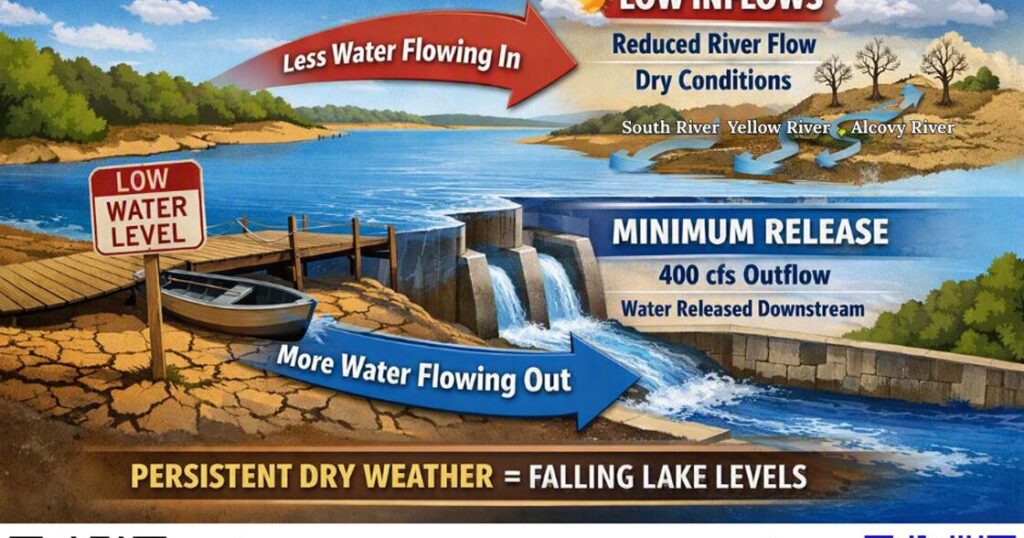
Many residents have asked why Jackson Lake’s water level has been falling. The simple answer is: less water is flowing into the lake than is flowing out. Jackson Lake is supplied by the rivers and streams in the drainage basin north and east of the lake, primarily the South River, Alcovy River and Yellow River. Under more typical conditions, inflows to the lake may range from approximately 600 to 1,200 cubic feet per second (cfs). Right now, however, total inflow has been running much lower—generally in the range of less than 300 to 400 cfs. That means the lake is not receiving enough water from its watershed to maintain normal levels. While we have seen scattered afternoon showers, they have been spotty and localized. Those storms may provide rain in one neighborhood or watershed area, but they do not necessarily deliver enough widespread rainfall across the full drainage basin to meaningfully increase river flows into Jackson Lake. To substantially improve lake inflows, the region needs a steady, widespread soaking rain—particularly across the watershed east of Atlanta and north of the lake. Sustained rainfall is what helps replenish creeks, rivers, and runoff throughout the basin. Georgia Power is currently releasing the minimum flow required, which is approximately 400 cfs. When inflows are below that level, the lake naturally declines because more water is being released downstream than is entering the lake upstream. For perspective, conditions can change dramatically…
Read the full story at jacksonprogress-argus.com →